
 Image 1 of 1
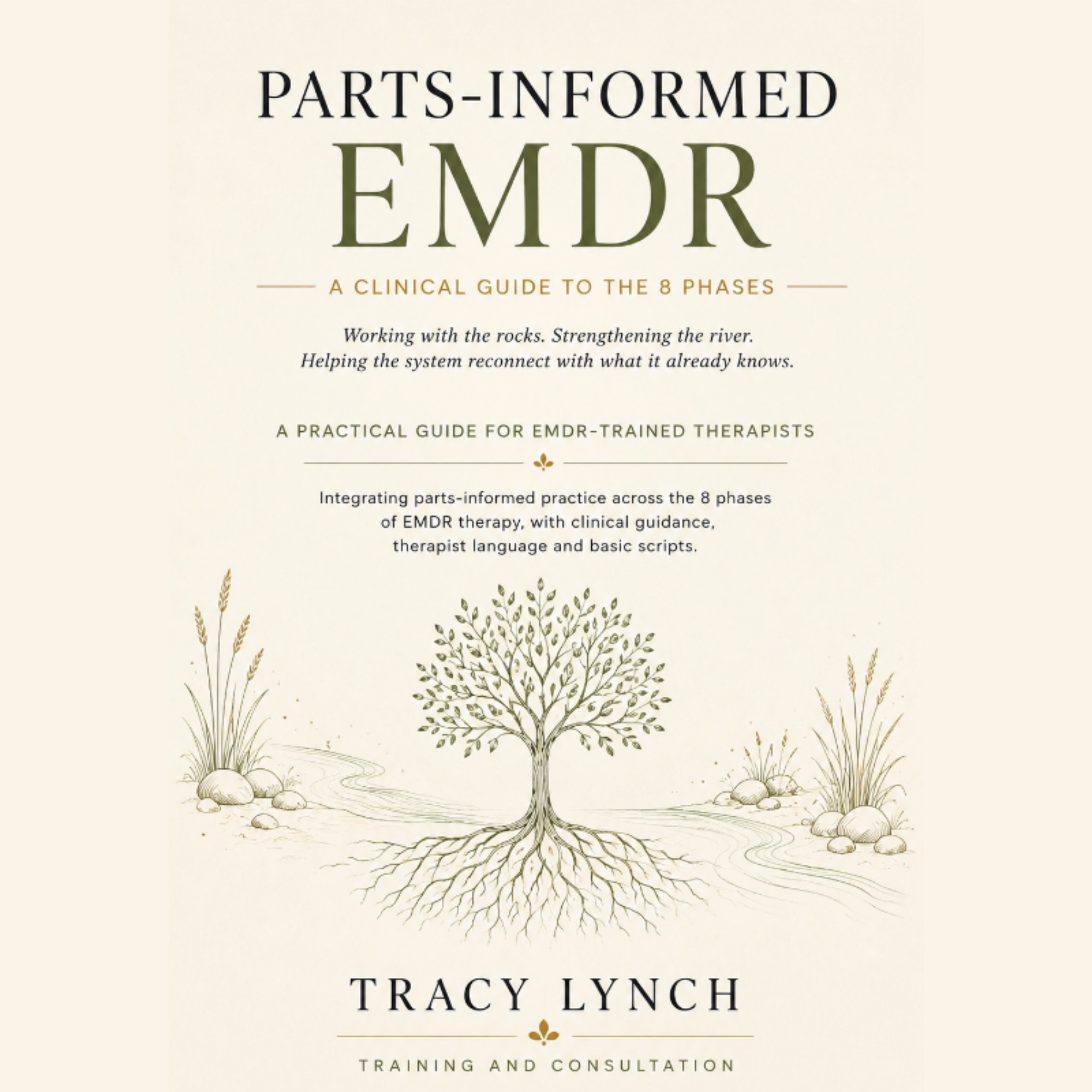
Parts-Informed EMDR: A Clinical Guide to the 8 Phases
A practical, parts informed clinical guide for EMDR trained therapists, integrating parts informed practice across all 8 phases of EMDR Therapy. Written by Australian EMDR Consultant and Parts Therapy Trainer Tracy Lynch.
Parts-Informed EMDR: A Clinical Guide to the 8 Phases offers a practical way of bringing a parts-informed lens into the EMDR therapy you already practise.
Using the River & Rocks metaphor, the guide explores both sides of the client’s system: the difficult experiences, beliefs, emotions and felt senses that have become stuck the rocks and the adaptive information, strength stories, memories, relationships and resources already held within the system the river.
The clinical task is not only to identify what is wounded. It is also to discover what the system already holds that is different, and to help make that adaptive information accessible when it is needed.
Inside the guide:
• A parts-informed clinical map of the 8 phases of EMDR therapy
• The River & Rocks framework for understanding stuck learning and adaptive information
• Beginning with the therapeutic goal and current activation
• Gathering both hot stories and strength stories across the timeline
• Noticing parts that hold distress and parts that hold different knowing
• Identifying and waking up adaptive information through best memories, strength stories, attachment figures, symbols, music, characters, animals and other meaningful resources
• Building an internal Resource Team
• Assessing readiness one foot in the room and one foot in the past
• Starting with the current prong and following emotion, body, belief and felt sense toward earlier associated experience
• Using BLS and allowing the system to process, with parts-informed interweaves when adaptive information is not emerging
• Strengthening the new knowing and reconnecting the part with its Resource Team
• Parts-informed guidance through body scan, closure and reevaluation
• Returning through the timeline to check what the system holds now
• Identifying the best mature resource in the system for the job at hand
• Anchoring that resource and running the movie into the future
• Practical therapist language, questions and basic scripts throughout
The central idea
We work with the rocks.
We strengthen the river.
We help the system reconnect with what it already knows.
This is not a new EMDR protocol and it does not replace standard EMDR training. It is a practical clinical adjunct for therapists who want to bring a parts-informed way of listening, understanding and intervening into their existing EMDR practice.
WHO IS IT FOR?
This resource is intended for clinicians who have completed recognised EMDR training.
WHAT YOU RECEIVE
• One downloadable 10 - page PDF clinical guide
• Immediate digital access following purchase
• Professional-use resource for the individual purchaser
• No physical product will be shipped
PROFESSIONAL USE
This resource is designed as a clinical adjunct and does not replace foundational EMDR training, clinical judgement, supervision or adherence to relevant professional standards.
COPYRIGHT
© Tracy Lynch 2026. Licensed to the purchaser for personal professional use. No reproduction, resale or distribution without written permission.